
Evidencing delay, disruption and instructions
Delay, disruption and change disputes are decided on records: what happened, what it affected, and who knew at the time. Here is what to keep, in the form that actually gets used.
Written from construction commercial and claims experience. Last reviewed 14 July 2026.
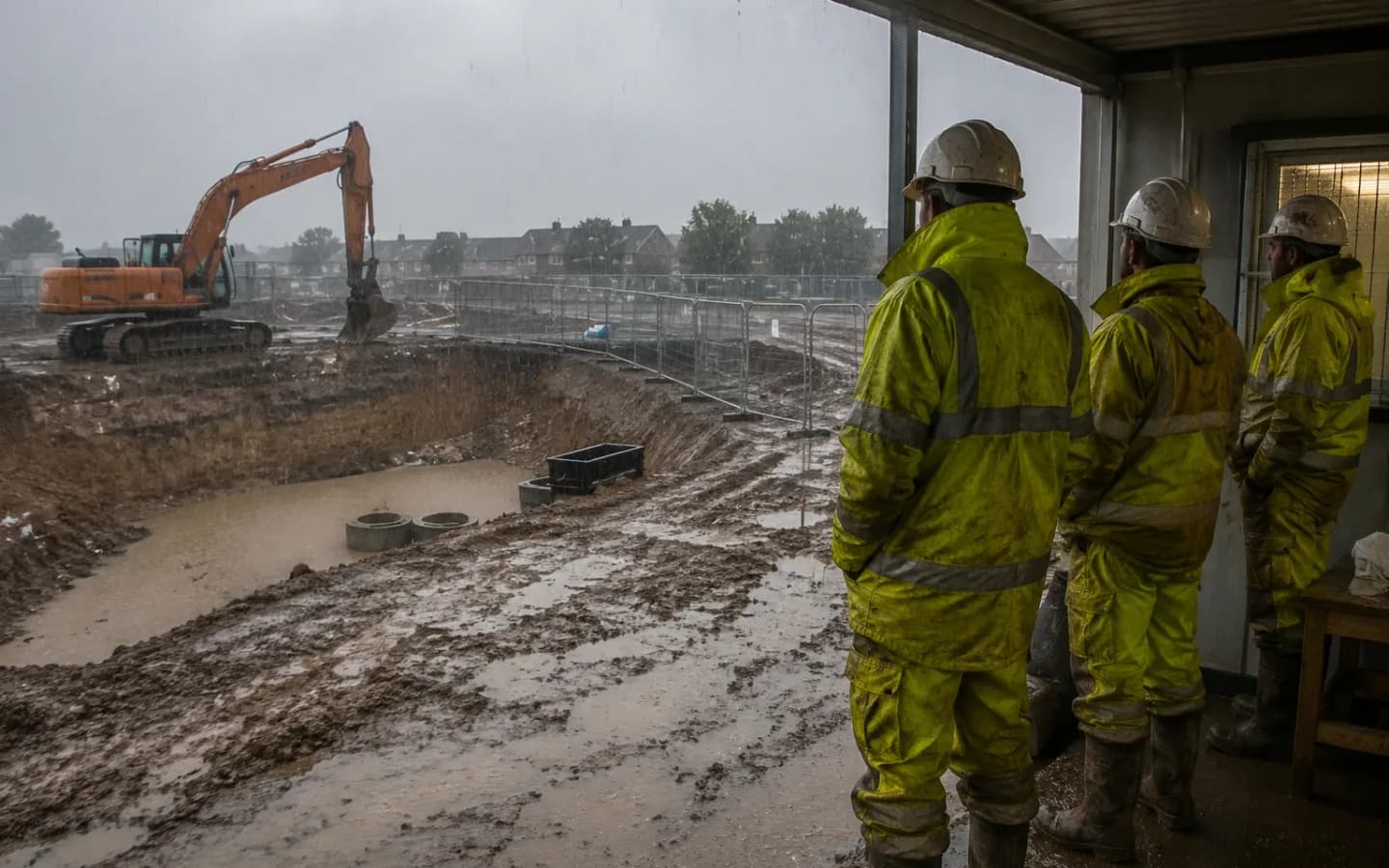
Cause and effect, or it didn’t happen
The weakness in most delay evidence isn’t that nothing was written down. It’s that facts and consequences were recorded separately, if at all. A diary that says “no access to Zone 2” on one page and shows a quiet labour return on another leaves the connection to be argued. A proper delay record makes the connection on the day: this event, caused by this party, stopped these resources for these hours and displaced this work. Cause tied to effect, once, at the time.
A complete delay record captures:
- What happened, in factual language
- When it started and ended (or "ongoing"), with clock times
- The cause, and the party responsible for it
- The labour and plant affected: named, with hours
- What work was displaced or resequenced as a result
- Photos or documents that show the condition or the obstruction
- Who on the client team was told, when, and their response
Disruption: the harder loss to prove
Disruption claims fail more often than delay claims because the loss is diffuse: everything got done, just less efficiently. The evidence that works is productivity data: planned versus achieved output for the affected work, recorded consistently. If your diary captures quantities achieved against activities every day (metres laid, units fixed), you automatically build the baseline and the dip: the same gang achieving 40m a day in clear areas and 15m a day while working around another trade is an argument made of records rather than adjectives.
The instruction register
Instructions (especially verbal ones) deserve their own register rather than a mention in the diary narrative, because at final account you will need them as a list, not as prose scattered across months. For each instruction, capture:
- Date and time received
- Who gave it, and in what form: verbal, email, drawing revision, formal instruction
- What was instructed, quoted or summarised precisely
- Any reference number or document it relates to
- Whether it changes scope, sequence, or cost: your on-the-day view
- Confirmation status: confirmed back in writing, awaiting formal instruction, disputed
Records are necessary; notices make them count
Keep the two jobs distinct in your head. Records prove what happened. Notices (served in the form and time your contract requires) preserve the entitlement to be paid for it. The most common expensive failure on subcontract work is having one without the other: immaculate records with a time-barred claim, or a valid notice supported by nothing. The daily habit that protects you is simple: record the event the day it occurs, tell the client’s team the same day in a form they must respond to, and check the notice clock before the week ends.
Related reading: the complete guide to site diaries and recording standing time.
Frequently asked questions
- What is the difference between delay and disruption?
- Delay is about time: an activity or the works finishing later than planned. Disruption is about productivity: the work still gets done on time overall, but less efficiently (out of sequence, in smaller fronts, with more moves and restarts) so it costs more. They often occur together but are evidenced differently: delay against the programme, disruption against planned versus achieved productivity.
- Do verbal instructions need to be recorded?
- Emphatically. Verbal instructions are where scope creep lives. Record who said what, when and where, then confirm it back in writing the same day if your contract provides for it. Many forms make a confirmed verbal instruction effective, and even where they don’t, the contemporaneous record of the conversation is valuable evidence.
- What records support an extension of time claim?
- The claim stands on cause, effect and entitlement: records showing the delaying event (diary entries, photos, correspondence), records tying it to specific activities and resources (which work stopped, what stood), the programme showing the effect on completion, and notices served as the contract requires. The site diary is typically the backbone of the factual layer.
- What are time bars and why do they matter?
- Some contracts make notice within a stated period a condition precedent to entitlement: miss the window and the claim can fail regardless of merit. NEC-style contracts are well known for this in relation to compensation events. The operational lesson: record events the day they happen and get notices in early; never let a record sit while an entitlement expires.
This guide is general information for construction site teams, not legal advice. Contract terms differ. Check yours, and take professional advice on live disputes.