
Recording standing time so you can recover it
A gang and an excavator standing for a morning is money gone quietly. Whether you ever get it back is usually decided on the day itself, by what got written down.
Written from construction commercial and claims experience. Last reviewed 14 July 2026.
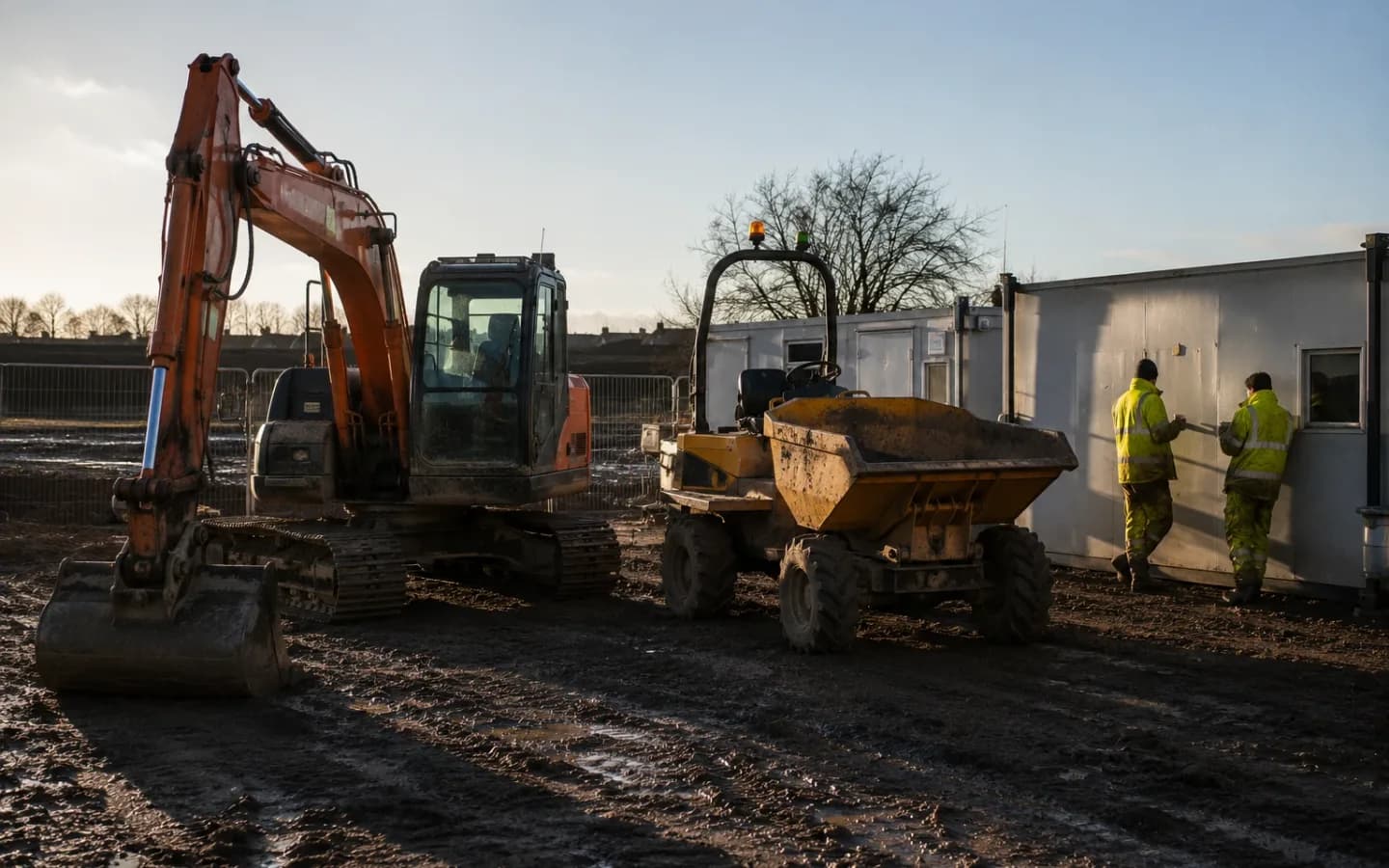
Why standing time slips through
Standing time rarely announces itself. It arrives as an hour waiting for a permit, a morning without access, an afternoon while another trade clears the area. Each episode feels too small to formalise, the gang gets moved to something half-productive, and nothing is written down. Across a contract those fragments add up to serious money, and by final account, nobody can say with precision which resources stood, for how long, or why. The claim becomes a negotiation about credibility instead of a calculation from records.
What to record on the day
- Start and end time of the standing period: clock times, not "the morning"
- Exactly which operatives and plant were standing (names/gangs, fleet numbers)
- The cause, stated factually: awaiting permit, awaiting access, awaiting information, awaiting attendance, weather
- Who was responsible for the thing you were waiting on
- What (if anything) the resources were redeployed to, and when
- A photo where it helps: the closed gate, the flooded excavation, the missing attendance
- Whether the delay was raised with the client team on the day, and with whom
The discipline that matters most is naming the affected resources. “Delayed by lack of access” is an observation; “gang of 4 plus 13t excavator and dumper stood 08:00–11:30 awaiting access to Zone 2, raised with [name] at 08:15” is a claim line. If the resources were partially redeployed, say so: honesty about mitigation makes the rest of the record more credible, and mitigation is usually expected of you anyway.
From record to recovery
Three layers turn standing-time records into recovered money. The daily diary establishes the facts. The delay or event record ties cause to effect: one entry per event, with the labour and plant affected, rather than facts scattered across pages. And contemporaneous exposure (telling the client’s team on the day, ideally in a form they acknowledge) removes the “first we’ve heard of it” defence. Then check your contract’s notice clauses: many entitlements are conditional on notifying within a set period, and the best records in the world cannot resurrect a time-barred claim.
Rates and quantum come last, and they come easily when the records exist: hours stood × resources named × applicable rates, with the diary as the source. That arithmetic is exactly what falls apart when the records were reconstructed.
Related reading: the complete guide to site diaries and evidencing delay, disruption and instructions.
Frequently asked questions
- What counts as standing time in construction?
- Standing (or idle) time is when labour or plant you are paying for cannot work productively: typically waiting on access, permits, information, materials, another trade, or attendances someone else was due to provide. Plant on hire accrues cost whether it digs or not, which is why standing plant is often the largest and most visible head of loss.
- Can a subcontractor claim for standing time?
- Often yes, where the cause sits with the contractor or client under the terms of the subcontract, but recovery depends almost entirely on evidence and on following the contract’s notice requirements. A claim built from contemporaneous records naming the resources, times and cause is a fundamentally different conversation from a lump-sum figure asserted at final account.
- Why do reconstructed standing time claims fail or get discounted?
- Because the other side attacks what cannot be proved: which specific resources were idle, for exactly how long, whether they could have been redeployed, and whether the stated cause was really the operative one. Records created weeks later from memory and hire invoices leave every one of those doors open, and settlements shrink accordingly.
- Does standing time need to be notified as well as recorded?
- Usually. Most standard forms and bespoke subcontracts contain notice provisions for delay and loss-and-expense type claims, some with strict time bars. The diary record proves what happened; the notice preserves the entitlement. Check your contract and, where in doubt, notify early and factually.
This guide is general information for construction site teams, not legal advice. Contract terms differ. Check yours, and take professional advice on live disputes.