
The complete guide to construction site diaries
A site diary is the daily record of what actually happened on site, and in a commercial argument months later, it is often the only thing that separates what you can prove from what you can only assert.
Written from construction commercial and claims experience. Last reviewed 14 July 2026.
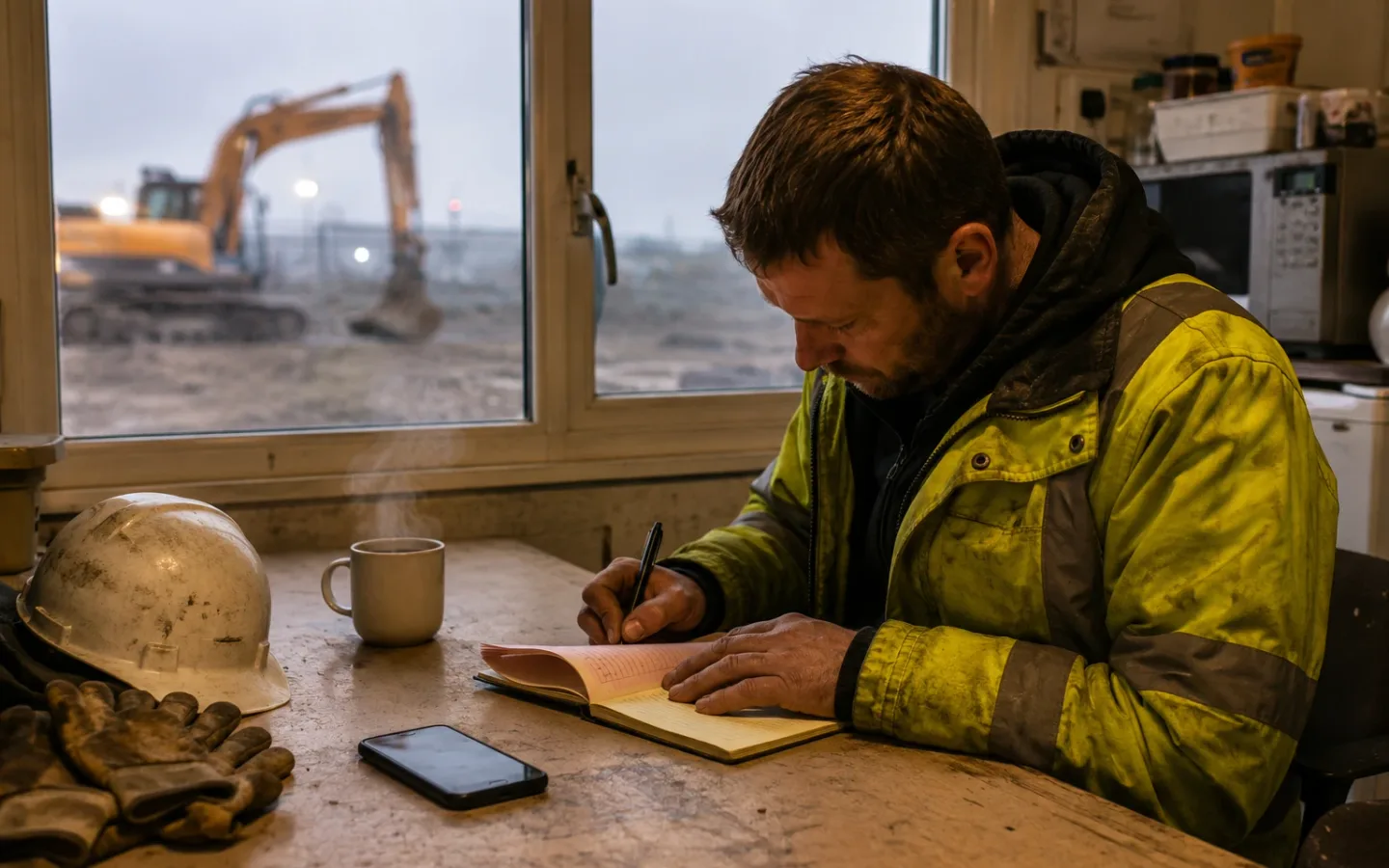
What a site diary is actually for
On a good day, a site diary is admin. On a bad project, it is the evidence file. Site diaries serve three jobs at once: they keep the office informed of daily reality, they satisfy the record-keeping duties most contracts impose, and (the one that pays for all the effort) they create contemporaneous evidence for the arguments that arrive later: standing time, delay, disruption, disputed instructions, and measured work the client’s representative “doesn’t remember”.
The key word is contemporaneous: made at or near the time of the events recorded. A diary entry written on the day beats a witness statement written a year later, because memory fades and interests shift. That principle (often traced to the maxim that contemporary records are the best evidence) is why experienced quantity surveyors treat the diary as the foundation of any claim.
What to record every day
A complete daily entry covers:
- Date, project, location/section of works, author
- Weather (and whether it affected work)
- Labour: names or gangs, own / agency / subcontract split, hours
- Plant: what was on site, fleet numbers, working hours, standing hours
- Materials delivered or awaited
- Work done: activities and quantities, tied to programme activities where possible
- Delays and disruption: what, when it started/ended, cause, who was affected
- Instructions received: from whom, verbal or written, reference
- Visitors, inspections, tests
- Photos of progress and of anything contentious, captioned
Two habits matter more than any format. First, record the bad days properly: the diary that only ever says “good progress” is useless precisely when you need it. Second, tie effects to causes: a delay entry that names the cause, the responsible party and the labour and plant affected is worth ten entries that just say “delayed”.
Where paper diaries fall down
Paper works until it has to perform. Common failure modes: the book stays in the van and gets filled in on Friday from memory; handwriting is unreadable or entries are undated; photos live on someone’s phone with no link to the day or event they evidence; labour and plant totals can’t be extracted without re-typing everything; and when the person leaves, the knowledge leaves with them. None of this makes paper records worthless, but each gap gets exploited when money is on the table.
A digital diary fixes the mechanical problems: entries are timestamped, photos attach to the day or event with captions, labour and plant become searchable totals rather than scribble, and submitted records can be locked so nobody can quietly rewrite history. What software cannot fix is discipline: the entry still has to be made, honestly, every day. Choose whatever your site team will actually use daily; a complete paper diary beats an abandoned app.
Making the record hard to argue with
Three things raise a diary from “our version of events” to evidence that is hard to dismiss. First-hand authorship: written by whoever supervised the work. Integrity: a clear trail showing entries weren’t edited after the event. And exposure: a record shared with the client’s representative at the time (who then acknowledged it, commented, or stayed silent) is far harder to dispute a year later than one produced from a drawer. Sharing the daily record isn’t a courtesy; it’s what converts your diary from private notes into a document both sides have lived with.
Related reading: recording standing time and evidencing delay, disruption and instructions.
Frequently asked questions
- Is a site diary a legal requirement in the UK?
- There is no blanket statutory requirement to keep a site diary, but many contracts require records of labour, plant and progress, and some expressly require daily records or diaries. Beyond contractual duty, the practical reason is evidential: tribunals, adjudicators and quantity surveyors consistently give more weight to records made at the time than to accounts reconstructed later.
- Who should fill in the site diary?
- The person who saw the work: normally the foreman, supervisor or site engineer for their section. A diary written by someone in the office from second-hand reports is weaker evidence and often wrong on detail. If several gangs work in different areas, each supervisor should record their own.
- How detailed does a site diary need to be?
- Detailed enough that someone who was not there could reconstruct the day: who was on site, what ran, what was achieved, what went wrong and why. "Worked in Zone 3" is not a record; "Gang of 4 laid 42m of 150mm main in Zone 3, stood 08:00–10:30 awaiting permit" is.
- Can a site diary be used as evidence in a dispute?
- Yes. Contemporaneous site records are routinely relied on in adjudication, arbitration and litigation, and their credibility depends on being made at or near the time, by someone with first-hand knowledge, and kept in a way that shows they have not been altered after the event.
This guide is general information for construction site teams, not legal advice. Contract terms differ. Check yours, and take professional advice on live disputes.